10 Emotional Regulation Activities for Kids Ages 3–5 That Actually Work
Part of our complete guide: Building Emotional Intelligence in Toddlers and Preschoolers: The Complete Parent's Guide
If your little one goes from perfectly happy to full meltdown in about 45 seconds, you are not alone — and there is nothing wrong with your child. Big feelings are completely normal for ages 3–5, but that doesn't mean you're helpless. The good news is that emotional regulation activities for kids don't have to be complicated or time-consuming. The ten activities below are playful, low-prep, and genuinely effective at helping young children learn to name, understand, and manage their emotions.
Why Emotional Regulation Matters for 3–5 Year Olds
Between ages three and five, your little one's brain is doing something remarkable: the prefrontal cortex — the part responsible for impulse control and emotional reasoning — is developing at a rapid pace. This is genuinely the best window to start building emotional regulation skills, because the habits and strategies your child learns now will stick with them for years. Research consistently shows that children who can identify and manage their emotions have stronger friendships, do better in school, and experience less anxiety as they grow.
But here's the thing: kids this age learn through play and through watching you. They aren't going to sit still for a feelings lecture. What they will do is blow dramatic whooshing breaths, act out angry faces, and drop tokens into a special bucket with great pride. That's the magic of making emotional learning feel like fun, not instruction. The activities below meet your little one exactly where they are.
10 Emotional Regulation Activities for Kids
1. Big Feelings Face Practice
This one is a wonderful starting point because you can't regulate emotions you haven't named yet. Sit down together and introduce four big feelings — happy, sad, angry, and frustrated — one at a time. Say the word, make the face together, and ask your little one when they feel that way. A big scrunchy angry face is deeply satisfying to a four-year-old, and that moment of silliness is actually doing important work.
Try Big Feelings from the app — it walks you through each emotion with prompts you can use word-for-word. The key message to leave your little one with: every single feeling is okay. What we're learning is how to know what we're feeling and what to do about it.
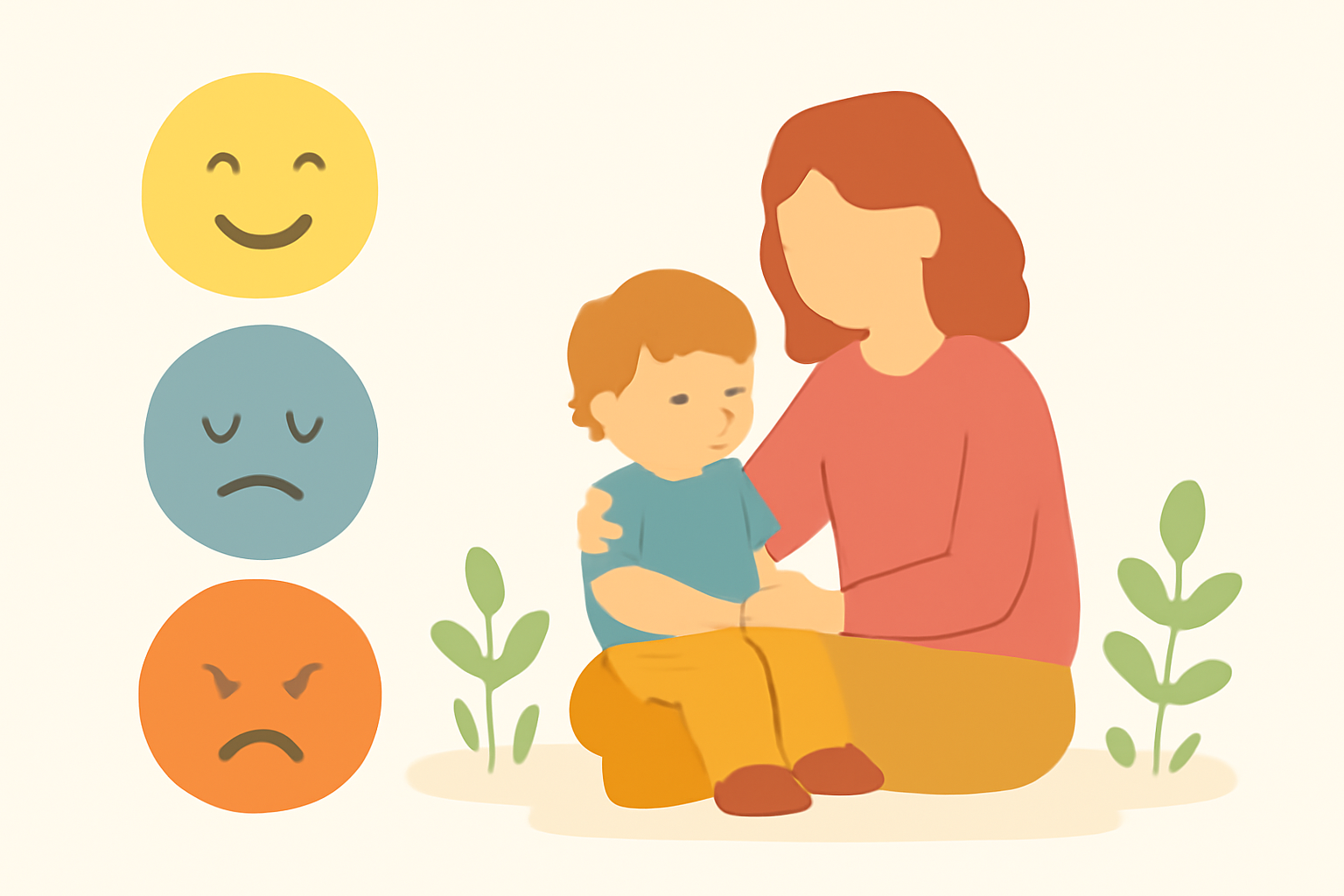
Naming emotions out loud is the foundation of all emotional regulation — children who can label a feeling are better able to manage it.
2. Feelings Charades
Once your little one knows the basics, it's time to level up their feelings vocabulary — and this game makes it genuinely entertaining. You act out an emotion using only your face and body, and they guess. Then switch. Start with easy ones like happy and sad, then introduce words like surprised, nervous, proud, or confused. When they correctly identify a trickier word, make a big deal of it: "You know what embarrassed means now — that's huge!"
Feelings Charades is a fantastic quiet-time or dinner-table activity that expands your child's emotional vocabulary without feeling like a lesson at all.
The bigger a child's feelings vocabulary, the more precisely they can communicate what's going on inside — which means fewer meltdowns driven by frustration at not having the words.
3. Feelings in My Body
Here's something kids this age find genuinely fascinating: emotions live in the body, not just the brain. When they're angry, their hands might get tight. When they're nervous, their tummy might feel funny. Helping your little one make that mind-body connection is a game-changer for self-awareness.
Draw a simple body outline together — a gingerbread-person shape works perfectly — and ask where different feelings show up. Color each spot a different color: maybe red for anger in the hands, blue for sadness in the chest. In Feelings in My Body, you end up with a personalized emotion map your child helped create — which means they'll actually remember it. In the days that follow, when a big feeling comes up, you can gently ask, "Where are you feeling that right now?"
Connecting emotions to physical sensations helps children notice a feeling building before it takes over — one of the most important early regulation skills there is.
4. Balloon Belly Breathing
Deep breathing is one of the most well-researched calming tools in existence, and this version makes it something a three-year-old actually wants to do. Lie down together, put your hands on your bellies, and breathe in through the nose to "fill up like a balloon." Then slowly whoooosh the air out through your mouth and feel the balloon deflate. The sound effects are non-negotiable — they're half the fun.
Balloon Belly works best when you practice it during calm moments so your little one can actually access it when they're upset. Five rounds a day for a week and it becomes second nature. The goal is for them to eventually reach for this tool on their own — and some kids genuinely do.
Slow diaphragmatic breathing activates the parasympathetic nervous system, helping your child's body physically shift out of a stress response.
5. Cool-Down Countdown
This is your in-the-moment rescue tool for when things are escalating. Kneel down to your little one's level, hold up five fingers, and count backward from five — one number per slow breath out, one finger down each time. At zero, pause and ask how their body feels. Most kids will notice a genuine shift, which is incredibly empowering for them to experience.
The trick with Cool-Down Countdown is to practice it when your little one is already calm — at the breakfast table, during bath time, just for fun. That way, the sequence is already familiar when emotions are running high and they can actually use it. When they eventually do it on their own, celebrate that: "You calmed yourself down — that's powerful!"
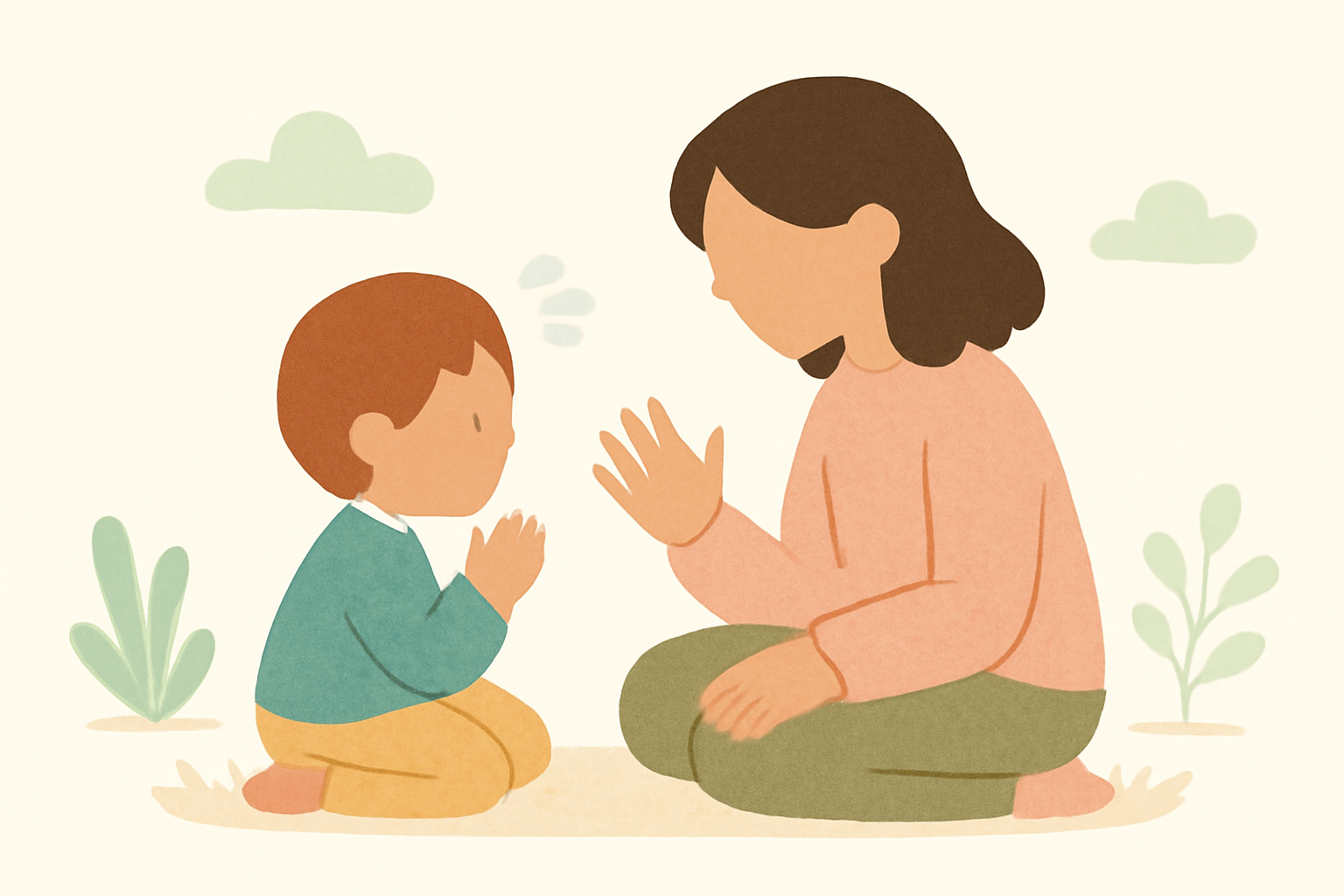
Giving children a concrete, numbered sequence to follow during big emotions provides just enough structure to interrupt a stress response and restore calm.
6. Bounce Back
Frustration tolerance — the ability to cope when things don't go as planned — is one of the core components of emotional regulation, and it's something kids ages 3–5 are just beginning to develop. This activity uses real-life moments (a block tower that fell, a drawing that got ripped, losing a game) to practice the skill of acknowledging a hard feeling and trying again.
In Bounce Back, the key is naming the feeling first — "I can see you're frustrated, that makes sense" — before moving to the breath and the try-again. Skipping the feeling and jumping straight to "just try again!" tends to backfire. Kids need to feel heard before they can move forward. The app gives you a lovely script: breathe in like you're smelling flowers, breathe out like you're blowing out a candle.
Practicing recovery — not perfection — builds resilience, one of the most protective factors for long-term emotional health.
7. Empathy Builder
Emotional regulation isn't only about managing our own feelings — it also involves understanding that other people have feelings too. This activity fits naturally into something you're already doing: reading books or watching a show together. Simply pause at an emotional moment and ask, "How do you think they're feeling right now?" Look at the character's face for clues, then connect it to your child's own experience.
Empathy Builder also opens the door to problem-solving: "If your friend felt sad like that, what could you do?" Keep it to one or two moments per story so it stays conversational rather than turning into a quiz. Over time, this habit quietly builds one of the most important social-emotional skills your little one will ever have.
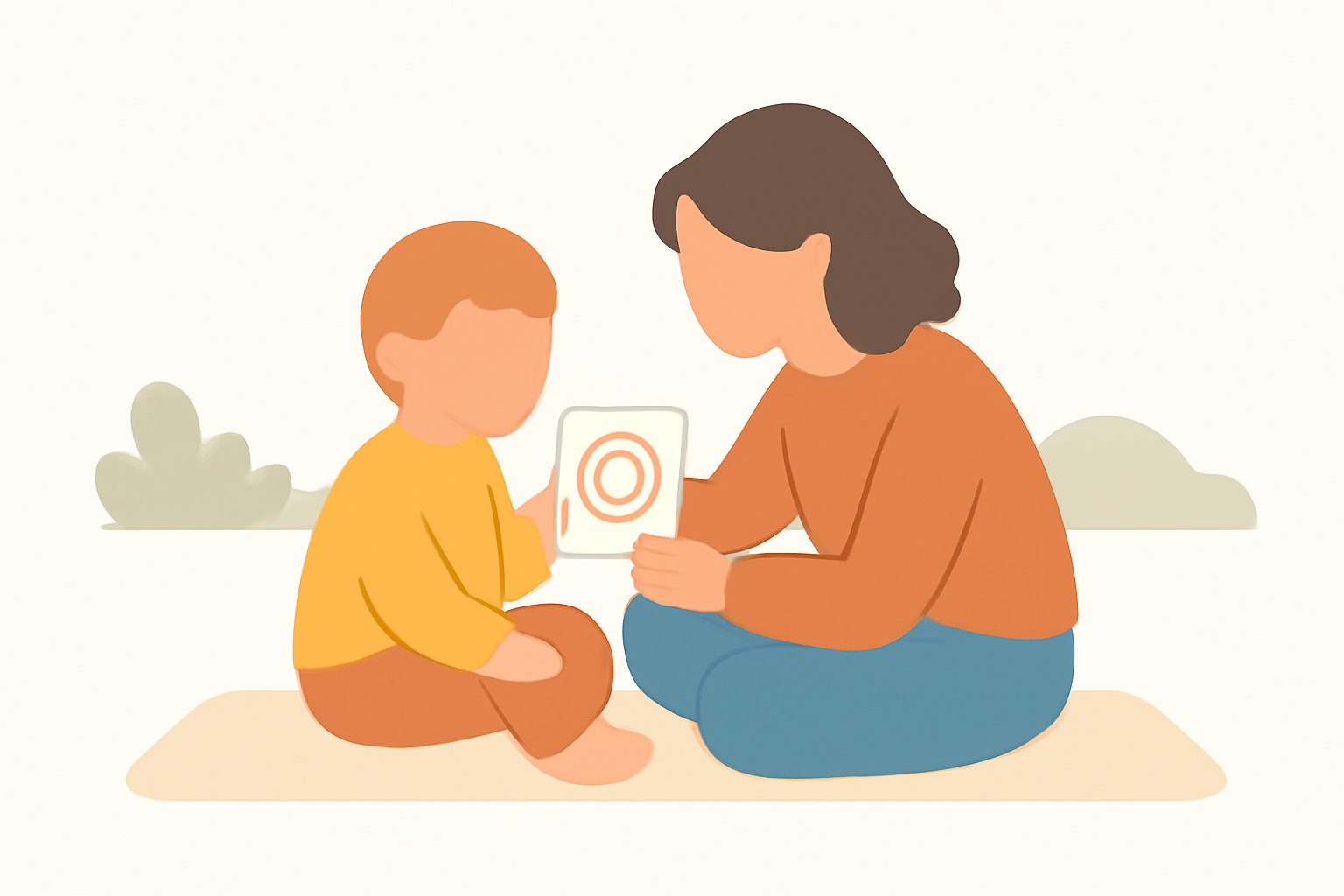
Developing empathy helps children regulate their own emotions in social situations by giving them a framework for understanding what's happening around them.
8. Feelings Charades: Brave Edition (Brave Bucket)
Fear is one of the trickiest emotions for young children to regulate because it feels so big and so real. The Brave Bucket turns facing something scary into a tangible, rewarding experience. Your little one names something that feels hard or a little frightening — trying a new food, saying hi to a neighbor, climbing one step higher — tries it (even a tiny version counts!), and then drops a token into the bucket with a triumphant "I was brave!"
Over time, watching the Brave Bucket fill up gives your little one concrete, visual evidence of their own courage. When they're facing something hard, you can point to the bucket: "Look at everything you've already done. You can do hard things." That's a genuinely powerful thing for a four-year-old to internalize.
Learning to move through fear rather than around it is a foundational emotional regulation skill — and the token system makes the internal work feel real and visible.
9. All by Myself
This one might surprise you on a list of emotional regulation activities for kids, but hear us out: independence and self-confidence are directly connected to emotional regulation. When your little one successfully does something on their own — getting dressed, pouring water, putting toys away — they experience a surge of pride and competence that acts as an emotional buffer against frustration and anxiety.
In All by Myself, the most important thing you'll do is step back. Let them struggle a little — that's genuinely where the pride comes from. When they finish, ask, "How does that feel?" rather than just saying "Good job!" Connecting the accomplishment to an internal feeling is the whole point. And if it doesn't go perfectly: "You tried it yourself, and that's what matters."
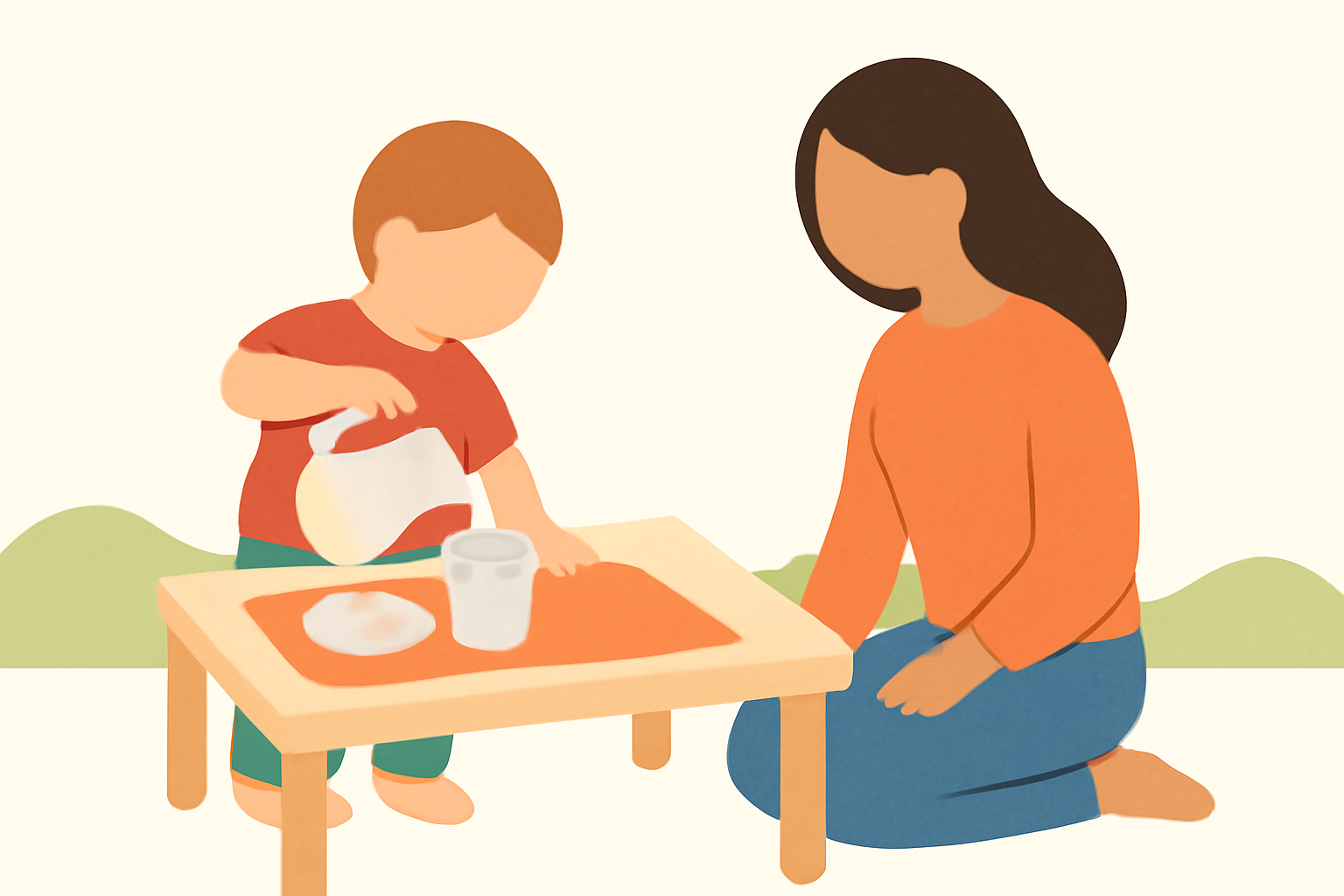
A sense of competence and autonomy strengthens a child's emotional foundation, making them more resilient when things do go wrong.
10. Bye-Bye Nightmares
Nighttime fears and bad dreams are incredibly common for ages 3–5 — and they're a great opportunity to teach a calming strategy your little one can use independently, even in the middle of the night. The key is to have this conversation during the day, not at bedtime when anxiety is already higher.
In Bye-Bye Nightmares, you explain that dreams are just stories the brain makes up, then you practice the calm-down trick together: three big belly breaths, followed by picturing their favorite happy place. "What's your happy place? The beach? Grandma's kitchen?" Practice it right there so it feels familiar. Knowing they have a tool — plus the reassurance that they can always come get you — makes a real difference in how quickly they can settle themselves back down.
Teaching children a self-soothing strategy they can use independently builds genuine confidence in their own ability to manage scary feelings.
Tips for Success with Emotional Regulation Activities
- Practice when things are calm. The best time to teach a calming strategy is when your little one doesn't need it yet. Trying to introduce balloon breathing mid-meltdown rarely works — but if they've practiced it ten times at the breakfast table, it's already in their toolkit.
- Keep sessions short. Five to ten minutes is plenty for ages 3–5. One activity done joyfully is worth ten done reluctantly. Follow their lead on when to stop.
- Model the skills yourself. Say out loud: "I'm feeling really frustrated right now — I'm going to take a deep breath." Your little one is watching you far more than they're listening to you.
- Celebrate the process, not perfection. When your child uses a calming strategy — even imperfectly — make a genuine big deal of it. "You noticed you were getting upset and tried your countdown. That's amazing." Positive reinforcement here is incredibly powerful.
- Be consistent but flexible. Some days your little one will be all in; other days they won't. That's normal. Revisit activities across weeks and months — emotional regulation is a long game, and repetition is how the skills get built.
Helping your little one navigate big emotions is one of the most meaningful things you can do for them — and with the right activities, it can also be one of the most fun parts of your day together. A few minutes of playful, intentional connection goes a long way toward raising a child who knows how to feel their feelings and find their way through them.
Get an activity like this every day
My Little Sparks sends you one fun, age-appropriate activity for your little one — completely free.
Try It Free